
Hand Trowel: Description, Uses, and Maintenance
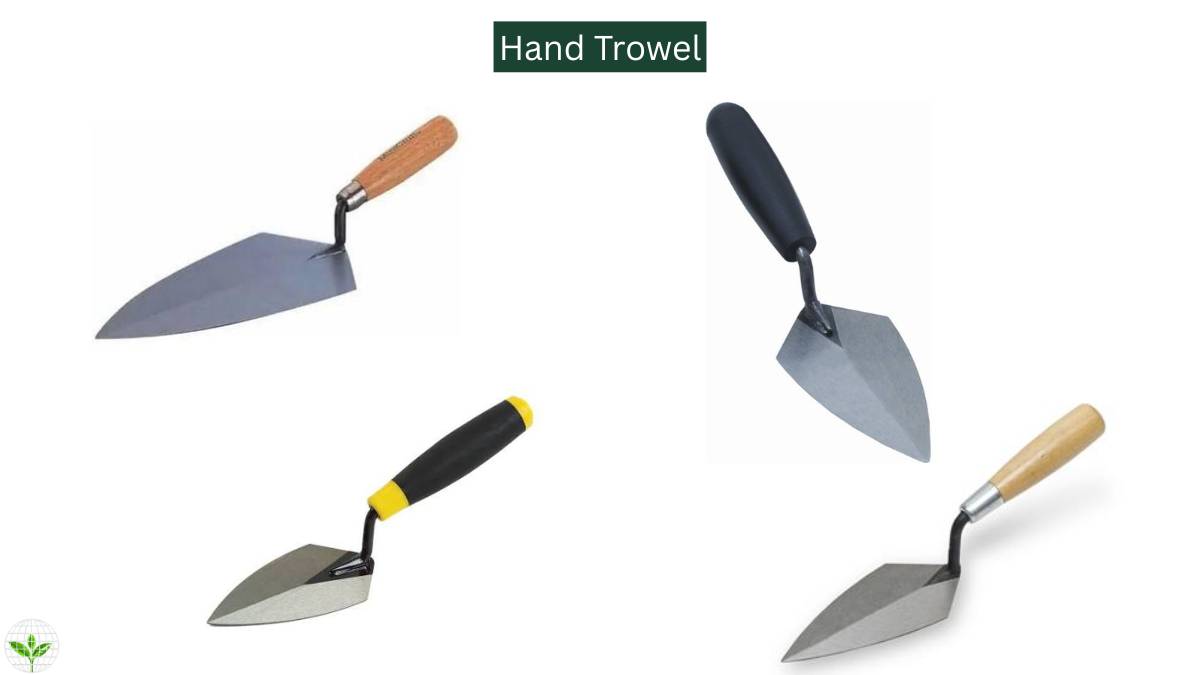
A hand trowel is a small, lightweight tool used in gardening, crop production, and certain construction activities around the farmstead. It typically consists of a metal blade attached to a handle made of wood, plastic, or another suitable material. The blade may be flat or slightly curved, with a pointed or rounded tip depending on the tool’s design. Common blade materials include carbon steel, stainless steel, and aluminium.
The blade is connected to the handle through a narrow metal section called the tang. A ferrule may be fitted around the joint to help secure the handle and prevent it from loosening or splitting. Depending on the design, a small screw or another fastening method may be used to hold the parts together. The handle is shaped to provide a comfortable grip and allow the user to control the tool easily.
Many hand trowels are approximately 30 cm long, although their size and shape vary according to their intended use. Garden trowels are generally designed for small-scale digging, loosening soil, and transplanting seedlings, while masonry trowels have blades suited to scooping, spreading, and smoothing mortar.
On the farmstead, hand trowels are used mainly for gardening tasks and minor construction work. During these activities, they may be used alongside other equipment, such as head pans, buckets, basins, or mixing containers, for carrying and handling soil, manure, or building materials.
How to Use the Hand Trowel
Using a hand trowel is relatively simple, although proper handling helps you work more effectively and avoid damaging plants or materials. The tool is commonly used in gardening for loosening soil, digging small holes, and transplanting seedlings. A masonry trowel, on the other hand, is used for construction tasks such as handling and spreading mortar.
- For Construction Purposes: Hold the masonry trowel firmly in one hand and use it to scoop mortar from a head pan or other container. Spread the mortar over the required surface, such as a foundation or the spaces between bricks or concrete blocks. Use the trowel to distribute the mixture evenly and press it into place where necessary. A separate flat tool or straightedge can be used to guide the mortar or level the surface, depending on the task.
- For Transplanting Seedlings: Hold the garden hand trowel in one hand while gently supporting the seedling with the other. Loosen the soil around the plant, then slide the trowel beneath the root area to lift it carefully with as much soil around the roots as possible. Place the seedling in its prepared hole or, if necessary, in a suitable container for transfer. Handle the plant gently to avoid damaging its roots or stem.
The exact method of using a hand trowel depends on the task and the type of trowel involved. In gardening, it is mainly used for small-scale digging and planting, while a masonry trowel is designed for handling and spreading mortar during construction.
Also Check: Types of Farm Tools and Their Classifications
Parts of the Hand Trowel
A hand trowel consists of several parts that make it useful for digging, scooping, and handling materials. The main parts include:
- Handle: The handle is usually made of wood, plastic, or metal. It provides a firm grip and allows the user to control the tool during use.
- Blade: The blade is the working part of the trowel. It may be flat or slightly curved, with a pointed or rounded tip, depending on the type of trowel. In gardening, it is used for digging, loosening soil, and transplanting seedlings. A masonry trowel has a blade designed for scooping, spreading, and shaping mortar.
- Tang: The tang is the narrow part of the metal blade that extends into the handle. It helps connect the blade to the handle and provides support during use.
- Ferrule: The ferrule is a metal ring fitted around the point where the handle and blade or tang meet. It helps secure the handle and reduces the risk of the wood splitting or loosening.
Uses of the Hand Trowel
A hand trowel is a versatile tool used for small-scale gardening, crop production, and certain construction activities. Its specific uses depend on whether it is a garden trowel or a masonry trowel.
- Transplanting Seedlings: A garden hand trowel is used to lift seedlings from nursery beds, pots, or seed trays and transplant them into prepared planting holes. It is useful for crops such as tomatoes and peppers, as well as young fruit trees such as mangoes and citrus.
- Applying Organic Manure: The trowel can be used to scoop and apply small quantities of organic manure, such as compost or well-rotted animal manure, around plants or into planting holes before planting.
- Applying Fertilizer: A hand trowel helps measure and place small quantities of fertilizer around crops or inside planting holes. Care should be taken to prevent direct contact between concentrated fertilizer and plant roots, as this may damage the plants.
- Digging Small Planting Holes: The pointed blade of a garden trowel makes it suitable for digging small holes for seeds, seedlings, and young plants. It is particularly useful in gardens, nurseries, and small plots where larger digging tools may be unnecessary.
- Applying Mortar During Construction: A masonry trowel is used to scoop, spread, and apply mortar when laying bricks or concrete blocks. It helps fill joints and distribute the mortar evenly during the construction of farm buildings and other structures.
- Mixing Soil: A garden trowel can be used to mix small quantities of soil with compost or other suitable organic materials. This is useful when preparing potting mixtures for seedlings grown in pots, trays, or nursery containers.
- Mixing Small Quantities of Mortar: A masonry trowel can help mix and turn small amounts of mortar during minor construction work. However, larger quantities of concrete or mortar are better mixed using a suitable mixing surface or mechanical mixer.
- Mixing Animal Feed Additives: A clean, dedicated trowel may be used to mix small quantities of animal feed with additives when preparing feed. It should not be used for this purpose if it has been exposed to cement, pesticides, or other potentially harmful substances.
- Trimming and Adjusting Bricks or Blocks: A masonry trowel can help remove excess mortar and make minor adjustments while laying bricks or blocks. However, it is not designed for cutting or breaking bricks and concrete blocks; a suitable masonry hammer or block-cutting tool should be used for that purpose.
- Smoothing and Leveling Surfaces: A garden trowel can help level small areas of soil around plants or within planting holes. A masonry trowel is used to smooth and shape mortar or plaster during construction. Larger surfaces generally require suitable leveling tools.
- Light Weeding: A garden trowel can loosen soil around weeds and help remove small weeds growing close to crops. Care is needed when working near young plants to avoid damaging their roots.
- Plastering Farm Buildings: A masonry trowel is used to apply and spread mortar or plaster over walls during the construction or repair of farm buildings, stores, and other farm structures. It helps distribute the material evenly and achieve a smoother finish.